The Greek model demonstrates how smart concessions deliver safer roads with impact on public finances
Greece’s motorway system has gained recognition as a standout concession success story. Hellastron, which brings together eight motorway concessionaires – soon nine – oversees more than 2,300 kilometres of strategic roads nationwide.
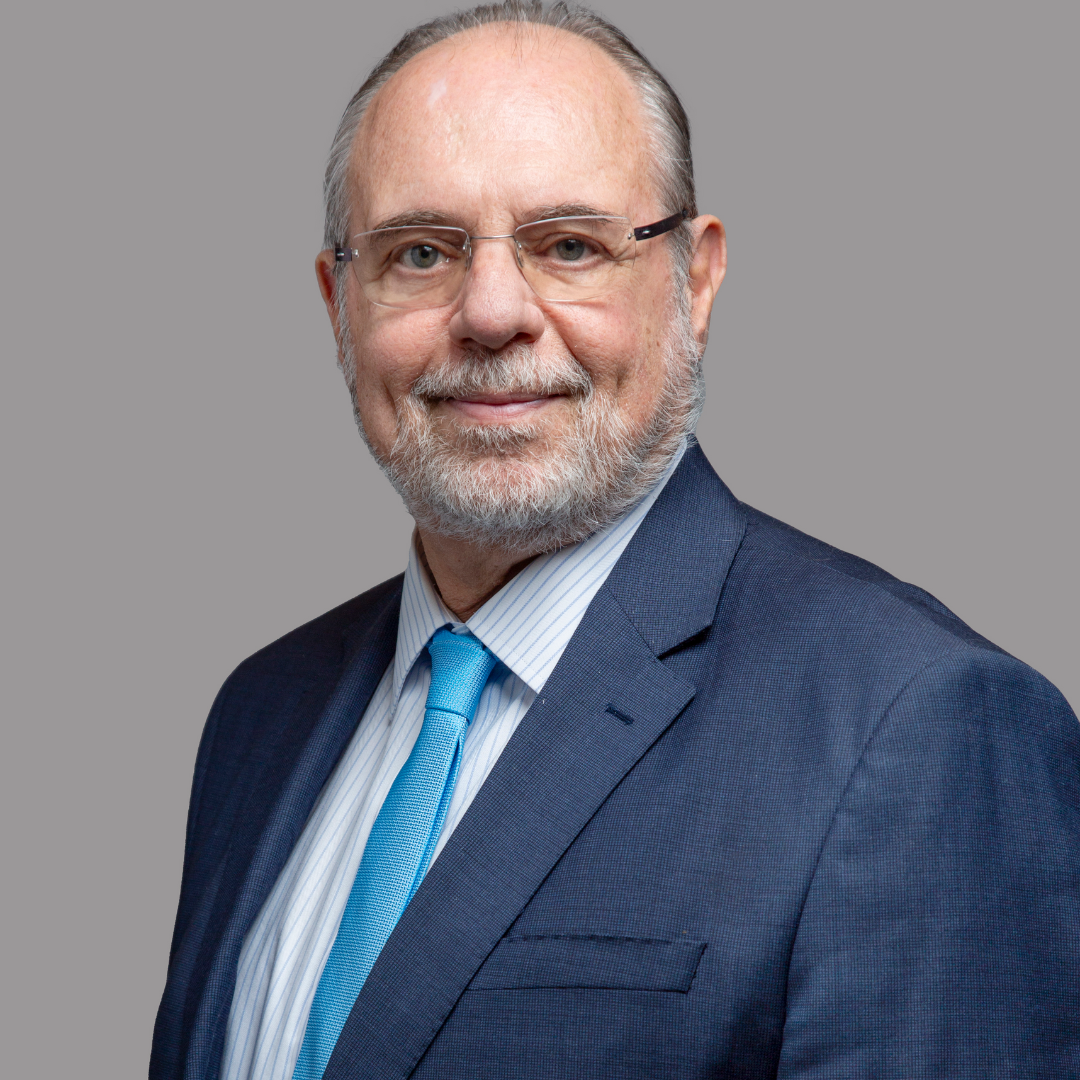
Euractiv spoke with Hellastron’s Manos Vrailas. He explained the transformation he’s witnessed from the first-generation projects to the current digital and climate-ready network, offering insights into how the model works and why it may hold lessons for Europe.
EV: Greece was once seen as a difficult environment for infrastructure investment, especially during the debt crisis years. What changed to allow the concession model to take root?
MV: The turning point came when Greece began to apply the concession model in a coherent and credible way. We started with two landmark projects in the early 2000s: the Attica Motorway and the Rio-Antirrio Bridge. Both were awarded as concessions, proved technically and financially successful, and demonstrated that Greece could deliver long-term public-private partnerships.
A crucial point is that concessions in Greece are not ordinary contracts; each one is a law voted in Parliament. This provides legal certainty for investors and lenders and transparency for citizens, because any modification requires a change-of-law process. Over time, this created a stable framework.
The Attica Motorway illustrates this well. When its original 25-year term expired, the state re-tendered the operation and maintenance. The new contract brought an upfront payment to the state of around €3.5 billion. For investors, this was a powerful vote of confidence. For the state, it represented a major inflow without increasing public debt.
EV: Greece now has one of the safest motorway networks in Europe. To what extent is this linked to the concession model?
MV: I would say directly. Twenty years ago, many routes that are now motorways were single-lane roads with extremely high accident rates. Today, these motorways are at least dual carriageways with tunnels, bridges, proper emergency lanes and a central reservation. They are monitored 24/7, maintained systematically and managed with modern traffic technologies.
The impact is clear. Only about 7 per cent of road fatalities in Greece occur on these motorways. On these key corridors, fatalities have fallen by more than 80 per cent since 2010. People feel safer; they see incidents handled quickly, and they appreciate that the network is kept to a consistently high standard. That is why tolls, even if not loved, are widely accepted in Greece.
EV: Beyond safety, what have been the wider economic impacts of the motorway programme?
MV: The effect has been transformative, especially for a mountainous country like Greece. I remember the Athens-Ioannina trip taking 11 hours. Today it takes around three and a half hours, and you can travel there and back the same day. That changes everything: regional development, tourism, investment and labour mobility.
A Greek government study estimated that every euro invested in motorways generates around €1.8 in GDP.
We see this through new factories, logistics hubs, increased tourism and the integration of regions that were previously isolated. Crucially, this has not burdened the state budget.
Construction is financed largely by lenders and private investors, with targeted public support where necessary. The state does not add debt to build or maintain these assets; instead, it receives upfront concession fees, collects taxes and VAT, and benefits from wider economic growth.
EV: Critics argue that tolls can be socially unfair, particularly in less affluent regions. How do you respond to that?
MV: Tolls in Greece are harmonised and indexed to inflation. The base rate is roughly €0.06 per kilometre and applies across all concession motorways. Citizens know exactly what they are paying for: a transparent tariff and a consistently high level of service.
Nobody enjoys paying, but there is an important distinction between user-pays and taxpayer-pays. The “user pays, polluter pays” principle is fairer and more sustainable. In most cases, a parallel road remains available for drivers who prefer not to pay. What we see time and again is that once people experience the safety and time savings of the motorway, they choose it and accept the toll.
EV: The VOAK motorway in Crete has been described as a “new generation” concession. What makes it different?
MV: VOAK is indeed a third-generation project. It is a 280-kilometre motorway along the north axis of Crete – an island with difficult terrain, an outdated existing main road and therefore very high accident rates. The project, valued at around €2 billion, could never have been financed through a traditional public-works budget.
It differs in several ways. It integrates recent EU directives on emissions, anticipating that heavy goods vehicles could pay differentiated tolls depending on their Euro class. Tolling will be entirely distance-based and the concessionaire must prepare the motorway for future tolling systems such as free-flow or satellite. And the contract embeds ESG and climate-resilience requirements from the outset.
The financing is also innovative. VOAK combines private capital with support from the EU Recovery and Resilience Facility. Strategically, VOAK closes the last major gap in Greece’s motorway network.
EV: How is Greece adapting its concession network to EU climate and digital objectives?
MV: For the newest concessions, like VOAK, alignment with EU objectives is already integrated: possible emission-based charging, preparation for free-flow tolling, EV-charging infrastructure and stricter environmental standards. For older concessions, adapting to new EU requirements will require legislative amendments and political decisions.
Greece is already investing heavily in resilience, because we have already experienced the effects of climate change. Recent floods caused billions of euros in damage, overtopping certain motorway sections that were properly built. Resilience is therefore essential.
At the same time, the EU requires a rapid expansion of high-power charging infrastructure along the network and access to alternative fuels. Compliance with these guidelines requires significant investments.
In my view, the only realistic way to finance this level of investment – without overstretching public budgets – is to extend and strengthen the concession model rather than move away from it.
EV: Should concession proceeds or expertise also support road-safety upgrades beyond the concession network?
MV: Conceptually, yes. Concession companies have the expertise, systems and personnel to operate and maintain complex assets such as tunnels and bridges, to monitor networks continuously and to respond rapidly to incidents. Extending that know-how beyond the tolled network would save lives.
The constraint is financial. Banks have not yet been fully repaid, and investors have not completed their returns on the second-generation concessions. You cannot ask concessionaires to spend money outside their network without altering the underlying contract. That is why we recommend and support longer concession terms.
Contract extensions would create the financial space to invest more in safety, climate resilience and digitalisation across the whole network – without raising tolls.
EV: Finally, what key lesson should European policymakers take from the Greek experience with concessions?
MV: In Greece, concessions are not just a financing tool; they are a public-service delivery model. They save lives, support economic growth and reduce fiscal pressure.
The state pays nothing from its annual budget to build, operate and maintain these motorways, yet receives significant upfront payments and regular tax revenues.
Citizens enjoy safer, faster and more reliable journeys. Investors and lenders have clear rules and legal certainty.
At a time when Europe needs enormous investment in defence, the energy transition and digital infrastructure, it cannot put everything back on the public balance sheet. It does not need to reinvent the system – just refine and scale what already works.
If we follow the principles of “user pays, polluter pays”, and design concessions with transparency and long-term incentives, they can become a cornerstone of Europe’s green and digital transition.
Source: www.euractiv.com